The complete Fushimi Inari visitor guide
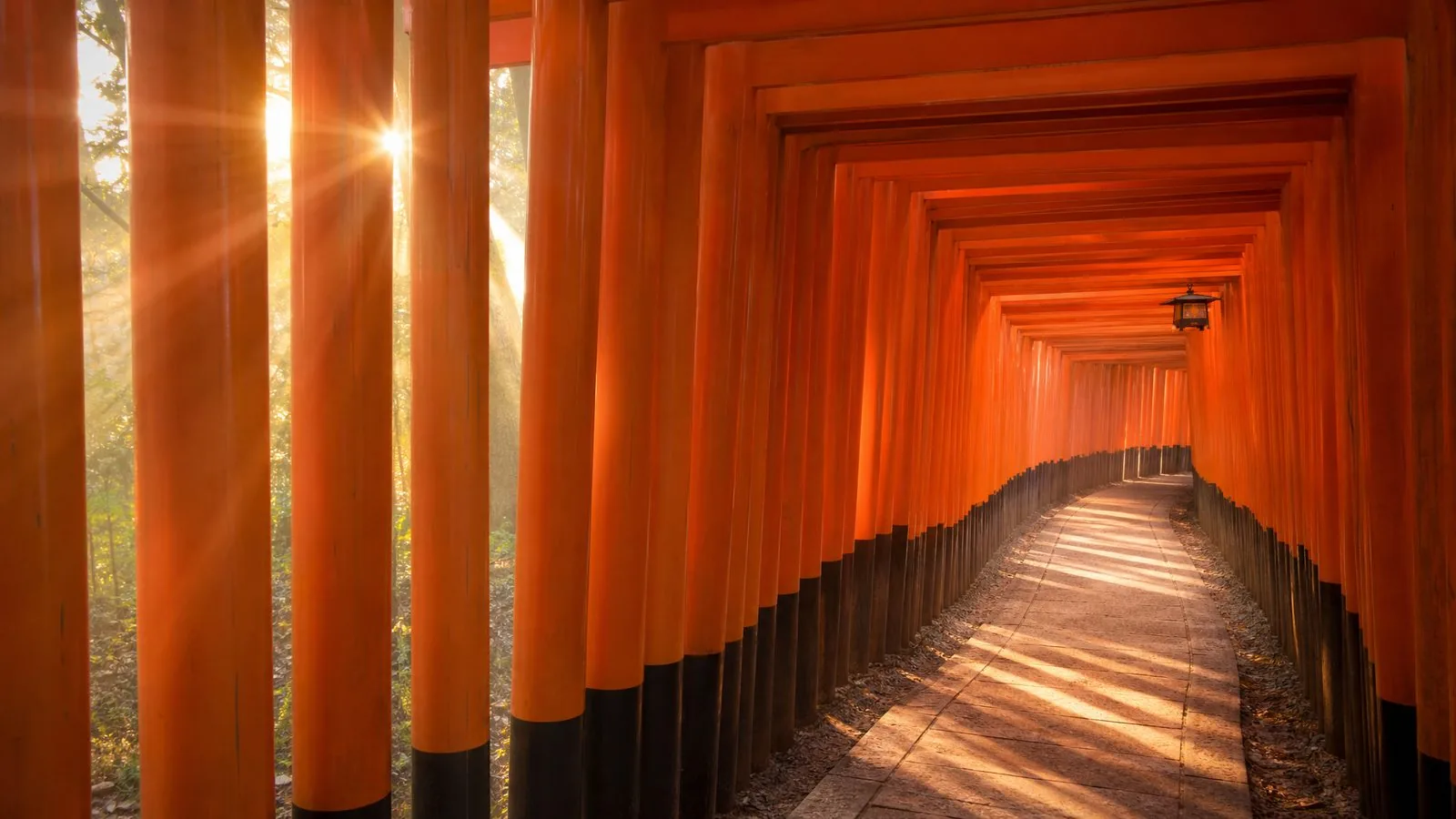
Planning your visit?Entry is free and no ticket exists — but the small-group sunrise and night walks book out days ahead. Cancellation is free up to 24 hours before, so you can reserve now and decide later.
Check guide availabilityI’ve been guiding walks on Mount Inari since 2015, and the single best decision I see visitors make is the one about timing. Not everyone needs a guide — but everyone needs a strategy for when to go. Here’s what I’ve learned.
The entry is free. Always.
Fushimi Inari Taisha opens its gates at all hours, every day, without charging a yen. There are no tickets. I mention this first because it’s the thing most people get wrong: they arrive expecting to buy entry, then feel obliged to book a tour. You don’t need to. What a tour does is solve the second problem: the timing and the path. Entry is free, but the mountain’s value is entirely in when you climb it.
Why the time matters more than anything else
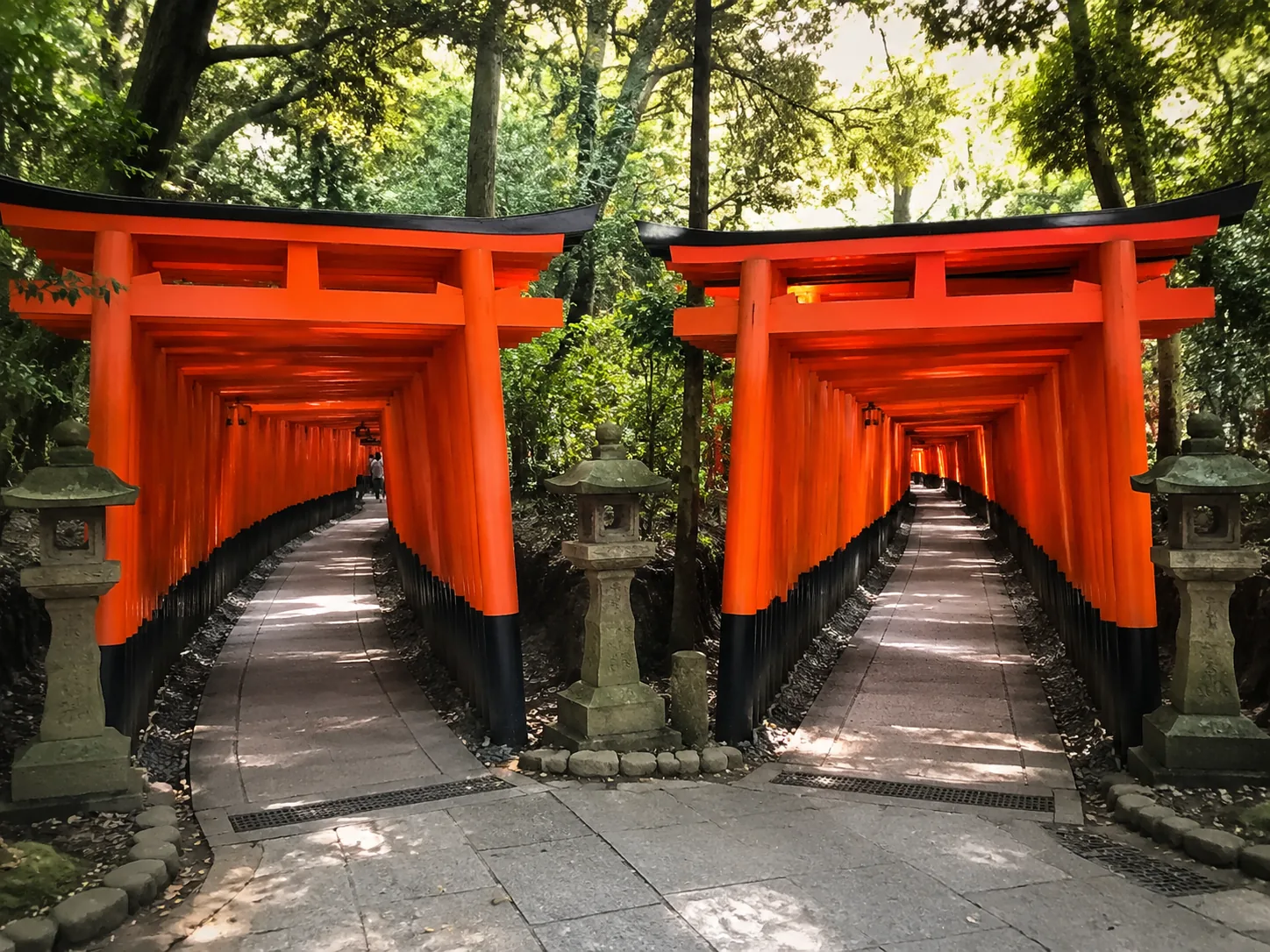
Fushimi Inari in daylight between 10:00 and 16:00 is not the Fushimi Inari you came for. In those hours, the famous tunnels of vermilion gates are crowded with phone cameras, and the narrow paths are shuffling lines. I’ve climbed this mountain hundreds of times, and I can tell you with certainty: there are four windows that actually work.
Early morning (5–8am): The shrine is genuinely empty. The light is soft and long. An early start beats peak season every time. The trade-off: your sleep schedule.
Evening or after dark: Crowds thin after sunset. Night walks feature lantern-lit lower gates (lovely but dim higher up). Weekday mornings in winter are quiet too.
What you’re actually walking
Lower loop (1 hour): Entrance → main shrine → Senbon Torii tunnels → Okusha inner shrine. Most visitors stop here.
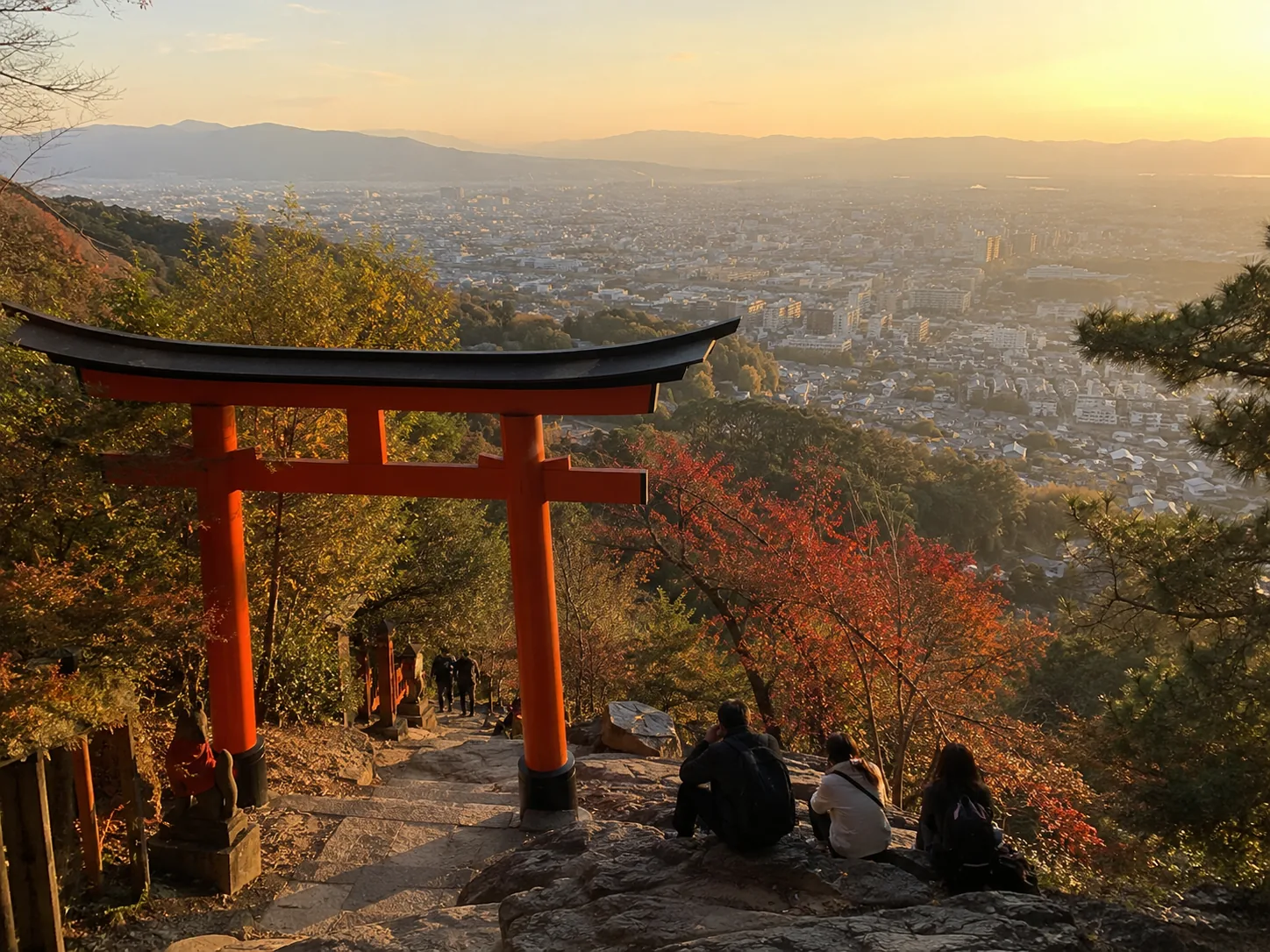
To Yotsutsuji (2–2.5 hours): Continue to the panoramic viewpoint overlooking Kyoto. Crowds thin out. Most guided tours finish here. The view is genuinely excellent.
Full summit (3.5–4 hours): From Yotsutsuji through bamboo groves to the 233-metre peak. The summit view is underwhelming; Yotsutsuji is actually better. Go for the quiet, not the peak.
Which tour for whom
Early-morning walk ($74): Best for photos and crowds. Empty gates in soft light, guide who knows where to stand.
Night tour ($40): Budget option. Atmospheric lantern light, no 5am wake-up.
Hidden hiking tour ($69): For quiet. Side paths, three hours, actual solitude. My preference.
Day bus tour ($118): Three Kyoto sights in one planned day (Fushimi Inari, Golden Pavilion, Bamboo Grove). Efficient.
Two quick things
Gates are donations. Each of the 10,000 was paid for by someone — the names are on the back, dates going back centuries. A visual history of wishes.
Walk the edges, not the middle. The middle is the kami’s path. You don’t walk there out of respect. That’s it.
The bottom line
You don’t need a guide — you need a strategy. Sunrise or one of the quiet windows. Then go: the time makes the difference.
Check dates and book
The early-morning walk is the one I recommend most often — live availability below, free cancellation up to 24 hours before. Or compare all four tours first.
Frequently asked questions
Do I need a ticket or a tour to visit Fushimi Inari?
No ticket exists — entry is free and the grounds are open 24 hours, every day of the year. A guided tour ($40–$118) buys you the right timing, the side paths and the stories, not admission.
How long does the Fushimi Inari hike take?
The full loop is about 4 km and takes 2–3 hours at a normal pace, on stone steps nearly the whole way. Most visitors turn around at the Yotsutsuji viewpoint, 30–40 minutes up, which has the panorama over southern Kyoto.
What time should I go to avoid crowds?
Before 8am or after sunset. The heaviest crowds run 10:00–16:00; above the Yotsutsuji intersection it's quiet at any hour because most people never climb that far.
How do I get to Fushimi Inari from Kyoto Station?
JR Nara Line to Inari Station — two stops, about five minutes, roughly ¥150 — and the station exit faces the shrine entrance. The Keihan Line to Fushimi-Inari Station is a three-minute walk instead.
Is Fushimi Inari safe at night?
Yes, with common sense. The lower gates are lantern-lit; the upper paths are dim and wild boars are occasionally seen higher up after dark, which is why the guided night walk is the easiest way to see it — more in our night-safety guide.